

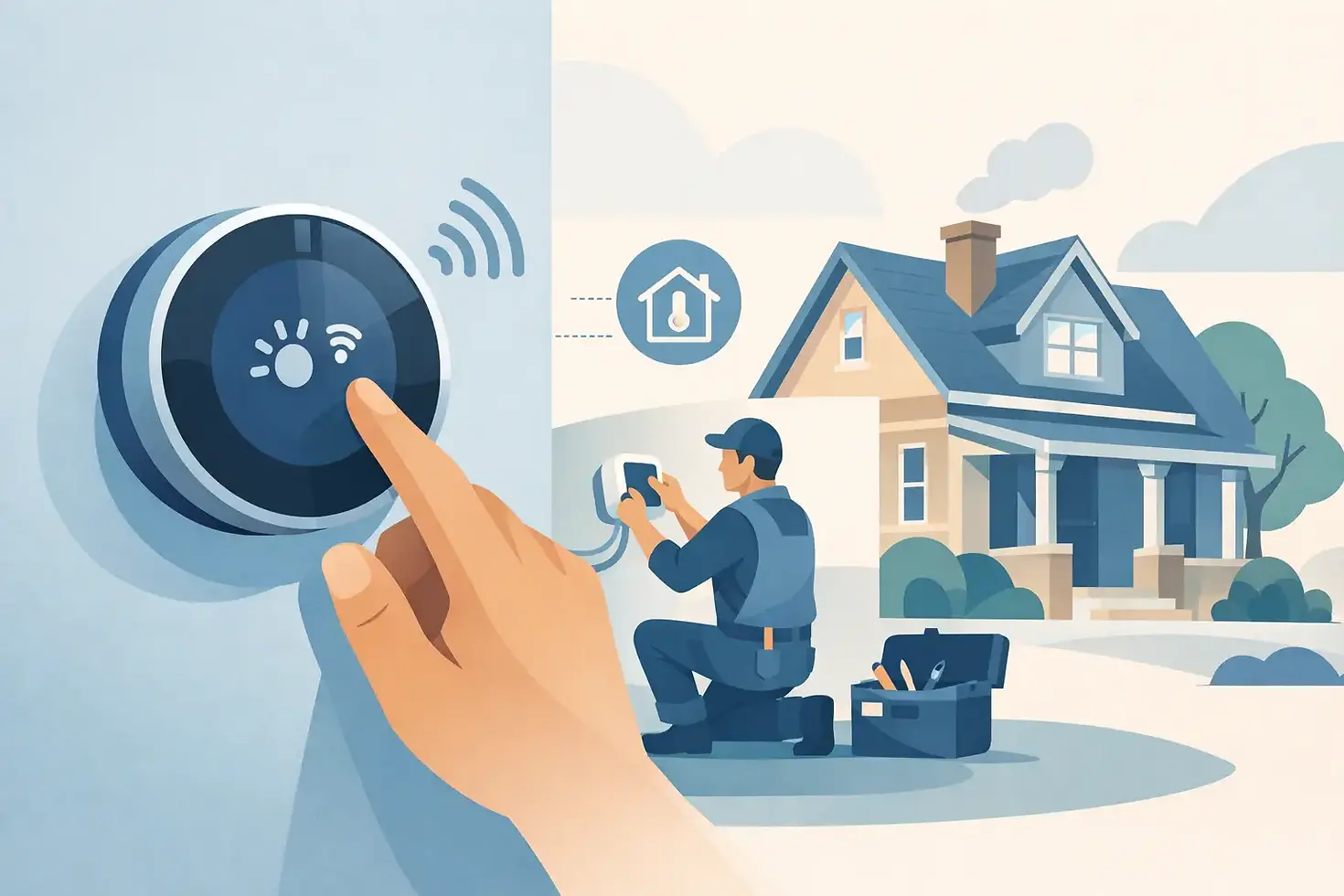
Smart Thermostat Installation for Older Homes

A 1920s bungalow with radiator heat has different thermostat needs than a newer home with a high-efficiency furnace. The same is true for a brick ranch with an aging air conditioner, an addition with its own system, or a rental property with equipment installed decades apart. Smart thermostat installation for older homes can be an excellent comfort upgrade, but only when the thermostat matches the home’s wiring and HVAC equipment.
For St. Louis homeowners, the goal is not simply getting a thermostat with a touchscreen. It is getting dependable heating and cooling, fewer hot and cold rooms, practical energy control, and a system that works when summer humidity or winter cold arrives. A professional evaluation helps prevent an inexpensive thermostat upgrade from turning into a no-heat or no-cooling service call.
Why older homes need a closer look
Older homes often have perfectly serviceable HVAC equipment paired with wiring that was never designed for Wi-Fi controls, app access, or continuous power to a display. Many original thermostats used only two wires to tell the furnace or boiler when to turn on and off. Most smart thermostats need a common wire, usually called a C-wire, to provide steady low-voltage power.
That does not mean an older home cannot use a smart thermostat. It means the wiring, transformer capacity, and equipment controls need to be checked first. In some cases, a technician can use an existing unused wire. In others, running new thermostat wire or installing a compatible power accessory is the more reliable choice.
The heating system also matters. A gas furnace, central air conditioner, heat pump, boiler, radiant floor system, and electric baseboard heater do not all communicate with a thermostat in the same way. A thermostat designed for a conventional forced-air system may not be compatible with high-voltage electric heat or a specialized boiler control. Choosing based on looks or a sale price can create more problems than it solves.
What to check before smart thermostat installation
A quick look at the wall wiring rarely tells the whole story. The wires at the thermostat may be different from the wires connected at the furnace, air handler, boiler, or outdoor unit. Older repairs and renovations can also leave behind disconnected wires, splices, or controls that no longer match the current equipment.
Before selecting a smart thermostat, a qualified HVAC technician should confirm these essentials:
The type of heating and cooling equipment serving the home
Whether the system uses low-voltage or line-voltage controls
The number and condition of thermostat wires
Whether a C-wire or another dependable power solution is available
Whether the equipment has zones, separate systems, or accessories such as a humidifier
This is especially useful in homes with a boiler and window air conditioners, a furnace serving one level and a separate system for an addition, or a heat pump with backup heat. These setups can still be controlled intelligently, but they need the right thermostat and correct configuration.
The C-wire question
The C-wire is one of the most common issues with smart thermostat installation in older homes. It does not control the furnace or air conditioner by itself. Instead, it provides a return path for power so the thermostat can stay connected to Wi-Fi, light its display, and operate consistently.
Some smart thermostat models can work without a C-wire under certain conditions. That can be convenient, but it is not always the best long-term answer. A thermostat that borrows power through other control wires may work intermittently, lose its charge, cycle equipment unexpectedly, or have trouble with certain furnaces and air handlers.
Adding a proper C-wire is often the cleaner solution when access allows. It helps the thermostat receive stable power and reduces the chance of nuisance issues later. A technician can also verify that the low-voltage transformer has adequate capacity for the thermostat and any connected accessories.
Boiler, radiator, and baseboard heat require special care
Many older St. Louis-area homes use boilers, radiators, or baseboard heat. These systems can provide comfortable, even warmth, but they respond differently than a forced-air furnace. A boiler may take longer to warm a home, while steam and radiant systems may require controls that account for their slower heating cycle.
Smart scheduling can still be useful, but aggressive temperature setbacks are not always the answer. Turning the temperature down too far overnight may force a slow system to work hard in the morning, reducing the savings you expected and delaying comfort. The best settings depend on the equipment, insulation, window condition, and how the household uses each room.
Electric baseboard heat deserves particular attention. Many baseboard systems use line voltage, not the 24-volt controls used by central HVAC equipment. They need a thermostat specifically rated for that application. Installing the wrong device can damage the thermostat or create a safety concern.
Smart thermostat benefits that matter at home
When the installation is done correctly, a smart thermostat gives homeowners more than remote control from a phone. It can make daily comfort easier to manage. You can set a routine that lowers energy use while the house is empty, then returns to a comfortable temperature before people come home.
For families, this can mean less adjusting when schedules change. For older adults, a clear display and consistent settings can remove some of the guesswork from operating the system. For landlords, remote temperature monitoring can be useful between tenants or when coordinating maintenance, while still respecting tenant privacy and access.
Many models also provide maintenance reminders, runtime reports, and alerts when a home is getting unusually hot or cold. Those features are helpful, but they do not replace regular filter changes, equipment maintenance, or prompt repair when the furnace or air conditioner is not performing correctly.
A smart thermostat will not fix undersized ductwork, a failing blower motor, poor attic insulation, leaky windows, or an aging system that cannot keep up. It can reveal patterns, such as unusually long run times, that point to a larger comfort problem. That information is valuable because it helps homeowners make informed decisions instead of guessing.
Placement matters as much as the thermostat
The thermostat can only react to the temperature where it is installed. In older homes, that location may be near a drafty exterior wall, a sunny window, a kitchen, a fireplace, or a stairway where heat rises. Any of these conditions can cause inaccurate readings and uneven comfort.
If the thermostat is in a poor location, replacing it with a smarter model may not solve the issue. A remote room sensor can help in some homes by measuring temperatures in the rooms people use most. In other homes, moving the thermostat or addressing airflow and insulation makes more sense.
Homes with closed-off rooms and multiple levels often need a realistic discussion about expectations. One thermostat cannot make every room identical in temperature. Balanced airflow, clean filters, properly operating dampers, and well-maintained equipment all play a part.
A professional installation protects your equipment
Thermostat wiring is low voltage in many central HVAC systems, but mistakes can still blow a fuse, damage a control board, or leave the system unable to heat or cool. The power should be shut off before wiring is moved, and each terminal must be matched to the equipment’s actual requirements, not simply the letter printed on an old thermostat.
After installation, the system should be tested in heating and cooling modes. A technician should confirm that the furnace, air conditioner, heat pump, fan, and any backup heat respond correctly. The thermostat should then be configured for the right equipment type and explained in plain language, including how to adjust schedules, use the app, and respond to alerts.
Breeze Heating & Cooling helps homeowners throughout the St. Louis area choose and install controls that fit their equipment instead of forcing a one-size-fits-all solution. Clear communication matters, especially in an older home where one small wiring detail can affect the entire system.
When a thermostat upgrade should lead to a larger conversation
Sometimes a thermostat upgrade exposes a bigger issue. If your furnace runs constantly, your air conditioner cannot control humidity, some rooms stay uncomfortable, or utility costs have climbed without a clear reason, the thermostat may only be part of the story.
A full HVAC evaluation can identify whether the problem is wiring, filtration, duct leakage, airflow, aging equipment, or indoor air quality. For health-conscious households, this is also a good time to discuss filter upgrades or air-cleaning options. Comfort is not just the number on the thermostat. It is how evenly your home heats and cools, how fresh the air feels, and whether the system runs reliably when you need it most.
The right smart thermostat should make an older home easier to live in, not harder to manage. Start with the equipment you have, let compatibility guide the choice, and give the installation the careful attention your home deserves.


Comments